The Fascinating History Behind Kawasaki
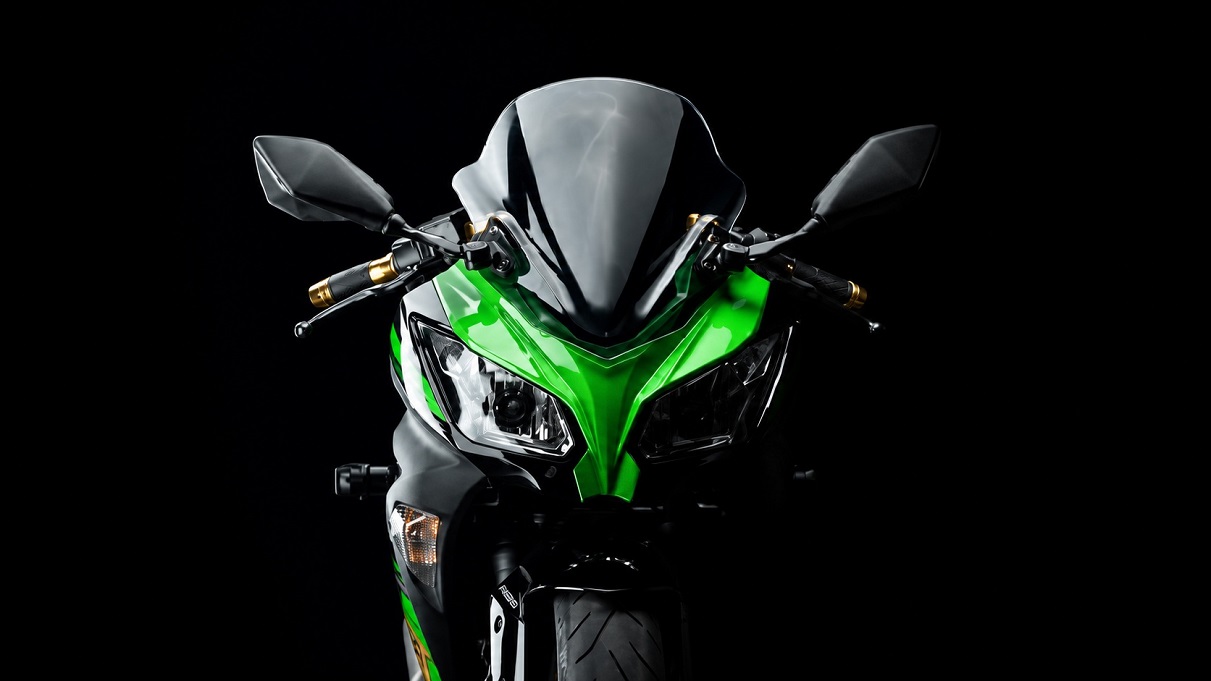
Kawasaki has never liked to do things quietly. The legendary Japanese manufacturer has spent decades building the fastest, wildest, most hair-raising motorbikes on the road. From the screaming two-stroke H1 Mach III to the legendary Z1, the first Ninja and today’s supercharged Ninja H2, Kawasaki has burned its indelible mark on the world’s roads.
Would you believe me if I told you Kawasaki’s story didn’t begin with motorcycles? Many years ago and long before the famous green bikes arrived, the company was building ships, aircraft and heavy machinery. It was this meticulous and innovative engineering background that would shape a performance-obsessed motorcycle brand.
So, how did Kawasaki go from heavy industry to becoming one of the biggest names in motorcycling? To get there, we need to start back at the beginning.
Kawasaki Before Motorcycles
Kawasaki’s story started long before anyone associated the name with motorcycles. In 1878, Shozo Kawasaki established Kawasaki Tsukiji Shipyard in Tokyo, marking the beginning of what would eventually become one of Japan’s major industrial companies.
Shipbuilding was only the beginning. Over the following decades, Kawasaki expanded into locomotives, heavy machinery and eventually aircraft, developing considerable expertise in engineering and manufacturing along the way. By the 1920s, Kawasaki was producing aircraft, beginning a long involvement in aviation and aircraft engineering that would become an important part of the company’s engineering heritage.
That background helps explain something about the motorcycles that followed. Kawasaki’s motorcycles emerged from a much larger engineering business. This eclectic background of work is the seed of the fundamental values of cutting-edge innovation that Kawasaki is globally renowned for.
By the middle of the 20th century, however, Japan’s growing motorcycle market presented Kawasaki with a very different opportunity. The company began producing motorcycle engines before moving towards complete bikes, thus setting the stage for the Kawasaki motorcycle story we know today.
When Did Kawasaki Start Making Motorcycles?
In the 1950’s Kawasaki’s move into motorcycles picked up momentum. Kawasaki produced its first motorcycle engine, the KE-1, in 1953, before moving towards complete motorcycles, including the Kawasaki 125 B7 in the early 1960s.
A major turning point came through Meguro, one of Japan’s oldest motorcycle manufacturers. Kawasaki initially formed a partnership with the company before eventually absorbing it in the 1960s. Meguro brought valuable motorcycle-building experience, particularly with larger-capacity four-stroke machines inspired by the iconic British motorcycles of the era.
The partnership helped Kawasaki move beyond small commuter bikes and towards the bigger, faster motorcycles that would define them.
By the end of the 1960s, Kawasaki was ready to make a much louder entrance onto the international stage. And it did so with a motorcycle that developed a reputation for being brutally fast, slightly terrifying and impossible to ignore… The H1 Mach III.
The Kawasaki H1 Mach III Changes Everything
In 1969, Kawasaki launched the H1 Mach III, and a world of riders raised their heads. Suddenly, the company had a motorcycle that people just couldn’t stop talking about.
Powered by a 498cc two-stroke three-cylinder engine, the H1 was built with performance firmly at the top of the agenda. It offered ferocious acceleration for its time and helped establish the performance-first reputation that Kawasaki still carries today.
It wasn’t for the faint-of-heart. The H1 became famous for its aggressive power delivery, light weight and handling that demanded respect. Those characteristics helped earn Kawasaki’s early two-strokes a reputation for being both thrilling and slightly intimidating. Not exactly for your beginner biking enthusiast.
The H1 was followed by other two-stroke triples, including the larger H2 Mach IV, further cementing Kawasaki’s position as the manufacturer willing to push performance further.
But outright speed was just the beginning. Kawasaki’s next landmark motorcycle would combine serious performance with a much more complete package and become one of the most important Japanese motorcycles ever built. Now that it had the world’s attention, it was time to take things up a gear.
The Birth of the Kawasaki Z1
If the H1 showed the world that Kawasaki could build seriously fast motorcycles, the Z1 proved it could build a truly great one.
Launched in 1972, the Kawasaki Z1 arrived with a 903cc four-cylinder, four-stroke engine producing around 80 horsepower. It was powerful, sophisticated and, crucially, far more rounded than the wild two-strokes that had helped establish Kawasaki’s reputation.
The timing was significant. Kawasaki had reportedly been developing a large four-cylinder motorcycle when Honda unveiled the CB750 in 1968. Rather than simply rushing its own bike to market, Kawasaki went back to the drawing board and created something bigger and more powerful.
The result was the Z1.
It quickly became one of the defining superbikes of the 1970s, combining impressive straight-line performance with everyday usability and unmistakable styling. More importantly, it established a formula Kawasaki would return to repeatedly over the following decades. Take the performance expected from a superbike and push it that little bit further.
The Z name also proved remarkably durable. More than 50 years later, it remains part of Kawasaki’s range, while retro-inspired models such as the Z900RS deliberately draw on the design and character of the original Z1.
Yet Kawasaki was determined to stick to its new formula, and by the 1980s, they were ready to take things up another level.
It was time to unleash the Ninja.
The Ninja Arrives
In 1984, Kawasaki introduced a motorcycle that would become its most famous name, the GPZ900R Ninja.
In terms of technological innovation, the GPZ900R release was a quantum leap. Its 908cc, liquid-cooled, 16-valve four-cylinder engine produced more than 100 horsepower, while its combination of performance, handling and aerodynamics helped redefine what riders expected from a sports bike.
As is the Kawasaki trademark, it was seriously quick. The GPZ900R could exceed 150mph, making it one of the fastest production motorcycles of its era.
Unsurprisingly, the Ninja name stuck.
Over the following decades, Kawasaki used it across everything from accessible sports bikes to uncompromising superbikes. Models including the ZX-6R, ZX-7R, ZX-9R and eventually the ZX-10R helped turn the Ninja name into shorthand for Kawasaki performance.
The GPZ900R even gained some Hollywood fame when it appeared in Top Gun, introducing Kawasaki’s new breed of sports bike to an audience far beyond dedicated motorcycle enthusiasts.
By the 1990s, Kawasaki had the name, the engineering and the racing pedigree. The next battle would be fought in an increasingly competitive superbike market.
Kawasaki and the Superbike Era
As the 1990s heated up, the superbike battle was getting serious. Honda, Yamaha, Suzuki and Kawasaki were all competing to build lighter, faster and more capable sports bikes, both for the road and the racetrack.
Kawasaki answered with machines such as the Ninja ZX-7R, a bike that became particularly closely associated with the company’s racing efforts. Its aggressive styling, distinctive twin headlights and unmistakable Kawasaki green helped define the look of the brand during the decade.
Then came the ZX-9R, combining superbike performance with slightly more road-friendly manners. But it was the arrival of the Ninja ZX-10R in 2004 that really signalled Kawasaki’s intentions for the modern superbike era.
Light, extremely powerful and uncompromising, the ZX-10R quickly developed a reputation as a serious rider’s machine. Later generations became increasingly sophisticated, adding advanced electronics, traction control and riding modes as superbike technology evolved.
The ZX-10R also became a formidable racing machine. Kawasaki enjoyed enormous success with it in the World Superbike Championship, particularly during Jonathan Rea’s record-breaking run of six consecutive riders’ titles between 2015 and 2020.
More than 50 years after the H1 Mach III, the formula was still recognisably Kawasaki: build something very fast, make it unmistakably green and give riders a motorcycle worth talking about.
The Bikes That Defined Kawasaki
Picking the motorcycles that define more than 60 years of Kawasaki history isn’t easy, but a handful stand out as genuine landmarks.
1969 – H1 Mach III: The wild 500cc two-stroke triple that helped establish Kawasaki’s reputation for outright performance.
1972 – Z1: A 903cc four-cylinder superbike that became one of the defining motorcycles of the 1970s and established the Z name.
1984 – GPZ900R Ninja: The bike that introduced the Ninja name and pushed Kawasaki into a new generation of high-performance sports bikes.
1996 – Ninja ZX-7R: One of Kawasaki’s most recognisable 1990s superbikes, with styling and racing pedigree that made it a firm enthusiast favourite.
2004 – Ninja ZX-10R: Kawasaki’s answer to the modern litre-class superbike battle: light, powerful and built with very few compromises.
2015 – Ninja H2: Kawasaki brought supercharging to a modern production motorcycle and created one of the most outrageous machines of the 21st century.
From two-stroke triples to supercharged Ninjas, the technology has changed dramatically. Yet, despite this, the underlying Kawasaki philosophy hasn’t changed. Performance is at the heart of everything they do, and perhaps this is the secret to their evergreen success.
Kawasaki Motorcycles Today
In today’s age, Kawasaki’s motorcycle range is much broader than just lightning-speed and screaming superbikes.
The Ninja family still carries the sporting side of the brand, from smaller-capacity machines through to the ZX-6R and flagship ZX-10R. The naked Z range offers another side of Kawasaki performance, while bikes such as the Versys have become popular with riders looking for something suited to touring and everyday riding.
Kawasaki hasn’t forgotten its history either. Modern retro machines such as the Z900RS take obvious inspiration from the original Z1, combining classic Kawasaki styling with modern engineering. An apt touch for riders fond of the sweet smell of nostalgia.
The innovation hasn’t stopped. By fitting a supercharger to the Ninja H2, Kawasaki once again produced the kind of motorcycle that seemed designed to make the rest of the industry pay attention.
More recently, Kawasaki has also started exploring electric and hybrid motorcycles as the industry begins moving towards alternative powertrains.
The motorcycles may be very different from the H1, Z1 and original Ninja, but Kawasaki remains at its happiest building memorable bikes.
Why Kawasaki Still Has Such a Loyal Following
Part of Kawasaki’s appeal is that the brand has always had a bit of an edge.
Honda has its reputation for refinement. Ducati has Italian style. Harley-Davidson has heritage. Kawasaki has spent much of its motorcycle history being associated with machines that feel fast, exciting and occasionally a little outrageous.
In today’s age, Kawasaki’s following isn’t built on performance alone. Riders can now choose everything from everyday commuters and adventure bikes to retro machines and track-focused superbikes, while still getting something carrying that familiar Kawasaki identity.
More than six decades after Kawasaki started producing motorcycles, that might be the biggest reason the brand remains so popular. The bikes have evolved enormously, but Kawasaki has never completely lost the attitude, fundamentals and values that made people notice them in the first place.
Kawasaki Motorcycle Insurance
Whether you ride a modern Ninja, a retro-inspired Z900RS or a Kawasaki that’s been in the garage for decades, getting the right insurance matters.
At Wicked Quotes, we help riders compare Kawasaki motorcycle insurance for everything from everyday bikes to high-performance, modified and classic models.